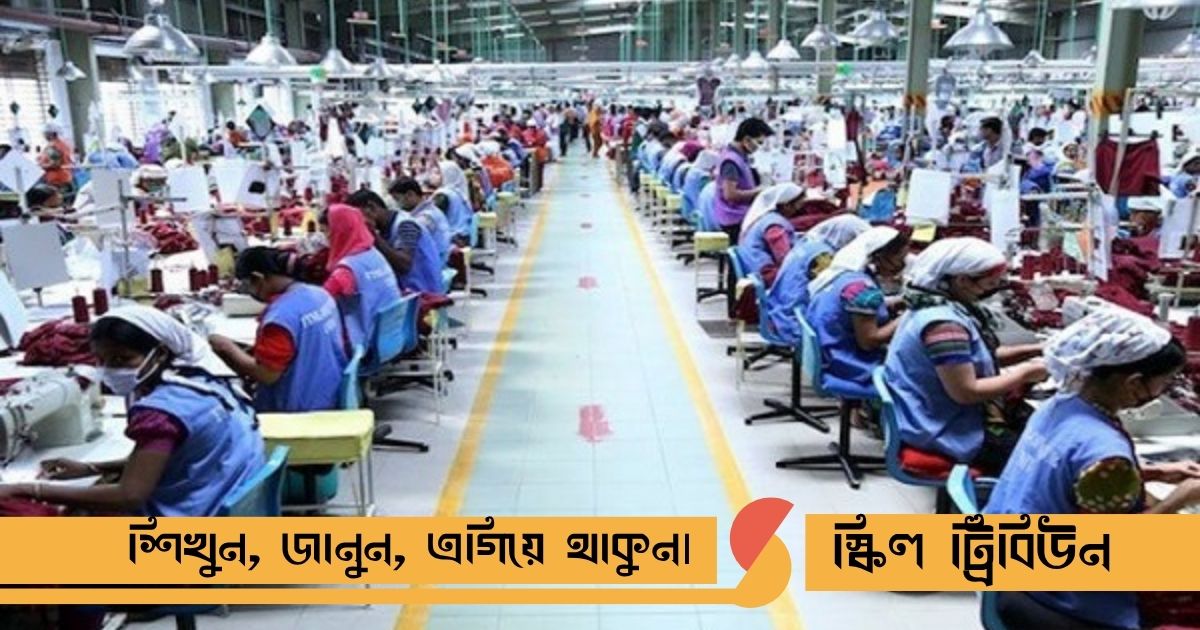
In this era of globalization, the garment industry of Bangladesh has gained a strong reputation in developed countries as a trusted brand. Due to our sufficient manpower, highly attractive labor market and strategic geographical location, large world-renowned investors from the developed world are constantly investing heavily in the ready-made garment sector of Bangladesh. In 1978, with only 9 factories and 0.069 million dollars in foreign exchange, the historic journey of this promising industry in Bangladesh began.Bangladesh’s Ready-Made Garments (RMG) in the 2024-25 fiscal yearExports have earned more than 39.35 billion US dollars in foreign exchange and the number of factories in this industry has reached more than 6,000. Not only that, Bangladesh has proven its immense potential in the international arena by occupying the second place in the world in ready-made garment exports. Currently, garments labeled “Made in Bangladesh” are being exported to more than 150 countries of the world with great reputation.
The Readymade Garments (RMG) sector alone contributes about 15 percent to the overall GDP of Bangladesh, putting the country’s overall economy on a strong footing. In this huge continuation of the country’s economic growth, the world’s leading multinational fashion and retail companies have expanded their operations in Bangladesh. Among them, H&M, GAP, Marks and Spencer, TESCO, UNIQLO, Li & Fung, YKK Bangladesh Pte. Ltd, Must Garment Corp. Ltd, Wal-Mart and Next Sourcing Ltd. and many other global giants are notable. It is worth noting that most of these renowned companies are included in the Top 100 List of the world-famous Fortune magazine and are very influential in international trade.
Skilled manpower shortage and international opportunities in the garment industry
At present, one thing is particularly noticeable among the highly educated young generation of our country that although there is a tendency towards other conventional sectors in terms of building a corporate career, there is not enough interest in the garment industry sector. In fact, one of the main reasons for this is that many people lack the right idea about the corporate structure and vast opportunities of the garment sector. So unfortunately, due to the lack of qualified and internationally skilled workers in our country, large multinational companies have to hire foreign officials from abroad at very high salaries. However, a large number of young people who have completed their postgraduate studies in our country are being deprived of this golden opportunity due to the lack of guidance.
However, in contrast to these existing challenges, those who have built a career in the garment industry through honesty, dedication and hard work are very successful. They are enjoying various attractive benefits at home and abroad, including high salaries and allowances, through their own efforts and talent. Being a labor-intensive industry, although most of the workers in this sector are from the general working class, there are countless opportunities and fields for highly educated people to work in top management positions in international buying houses, manufacturing plants and corporate headquarters.
— Read more: Youth Development AI Training 2026: Application rules for completely free courses and daily allowance in 64 districts
Backward and forward linkages: Two strong pillars of the garment sector
In the RMG or ready-made garment sector, two terms are very widely used and carry fundamental importance: Backward Linkage and Forward Linkage . In fact, these two sectors play an integral role in keeping the entire supply chain, both before and after the original garment production, well-organized.
-
Backward Linkage: Generally, companies that are involved in the production of raw materials and various components (such as buttons, zippers, threads, labels, accessories) required before the production of the main garment or final garment are covered by backward linkage. Some notable international and local backward linkage companies that have successfully worked in Bangladesh are Avery Dennison Bangladesh Ltd, A1 Zipper, YKK Bangladesh Pte. Ltd etc.
-
Forward Linkage: On the other hand, forward linkages are the organizations that work to safely ship the final garment to the international buyer or buyer through proper packing, shipment and logistics framework in accordance with international standards. Examples of some of the most trusted and international forward linkage organizations operating in Bangladesh are Maersk Bangladesh Ltd, Homebound Packers & Shippers Limited, DHL Worldwide Express (BD) Pvt. Ltd etc.
| Sector name | Primary tasks and responsibilities | Major organizations operating in Bangladesh |
| Backward Linkage | Supply of raw materials, labels, zippers and accessories | Avery Dennison, A1 Zipper, YKK Bangladesh |
| Forward Linkage | Logistics, packing, freight forwarding and fast delivery | Maersk Bangladesh, Homebound Packers, DHL Express |
— Read more : Job Interview Questions and Answers: Top 15 Questions and Smart Answering Techniques
Top 9 Management Departments in RMG Sector for Highly Educated Youth
The ready-made garment industry is not just about factory sewing machines or manual labor. In fact, there are several world-class corporate departments open to graduates with postgraduate and undergraduate degrees in back-office operations, international business communication, and branding.
1. Human Resource Management
The Human Resources department plays a key role in the working environment, payroll, employee training, and implementation of compliance policies for thousands of workers. It is impossible to manage a large workforce without the right HR strategy. As a result, there is a huge demand for skilled HR professionals in this department.
2. Merchandising
Merchandising is the heart of the garment industry. From communicating with buyers, determining fabric costing, sourcing to ensuring timely shipment, the main job of a merchandiser is to ensure that the goods are delivered on time. In fact, a successful merchandiser acts as a bridge between the buying house and the factory.
3. Quality Control (Quality Control / Quality Assurance)
International brands do not compromise on product quality. Therefore, quality controllers and quality assurance managers work tirelessly to ensure that the finishing of the fabric, the correct stitching quality, and the measurements of the garments are perfect.
4. Industrial Engineering (IE)
Mechanical and industrial engineers play a vital role in increasing productivity, reducing unnecessary downtime, and balancing lines. In the era of modern garment automation, industrial engineering ensures major financial savings for organizations through data-driven decisions.
5. Fashion Designing
Fashion designers create sketches, patterns, and samples of new clothing based on the latest trends in the global market and buyer requirements. This is a very exciting and high-paying field for creative young people.
6. Compliance (Compliance Management)
The compliance team monitors compliance with international labor laws, environmental protection systems, and safety standards. An experienced compliance officer is essential for buyers to successfully pass audits.
7. Purchase & Procurement
The Purchase and Procurement team’s job is to procure quality yarns, fabrics, dies, and accessories at the right time and at the best price. The strategic decisions of this department play a huge role in reducing costs in international trade.
8. Commercial Department
The Commercial Department is responsible for opening LCs (Letters of Credit), processing banking documents, handling customs clearance and import-export regulations. They handle the legal and economic aspects of international trade with precision.
9. Other specialized sectors (IT, Finance & Supply Chain)
In addition to these, IT specialists are regularly needed to manage ERP software, accountants for financial reporting, and supply chain professionals to control global logistics.
| Department name | Main core work | Required Qualifications/Skills |
| Merchandising | Buyer Engagement, Costing, and Shipping | Excellent English communication and negotiation |
| Industrial Engineering | Line setup, saving time and increasing production | Analytical capabilities and process engineering |
| Compliance | Safety, environment and international audit standards | Knowledge of audit rules and labor laws |
— Read more : Bank Job Interview: 145 Common Questions, Sample Answers and Complete Preparation
Bangladesh’s ready-made garment sector was not only the foundation of our past economy, but also one of the biggest drivers of international trade and corporate careers of highly educated youth in the future. If the younger generation changes its perspective and embraces the challenges and infinite potential of this sector, it will be possible to reduce foreign dependence and create skilled domestic leadership. As a result, the “Made in Bangladesh” brand will become stronger in the global market.
Transparency Note : All information and statistics used in this article have been compiled based on Wikipedia, The Financial Express, The Guardian, and the direct opinions of senior merchandising and HR managers working in the industry.